Heart Failure with preserved Ejection Fraction (HFpEF)
The Need for Developing Therapies for Heart Failure with Preserved Ejection Fraction (HFpEF) as an Unmet Clinical Need
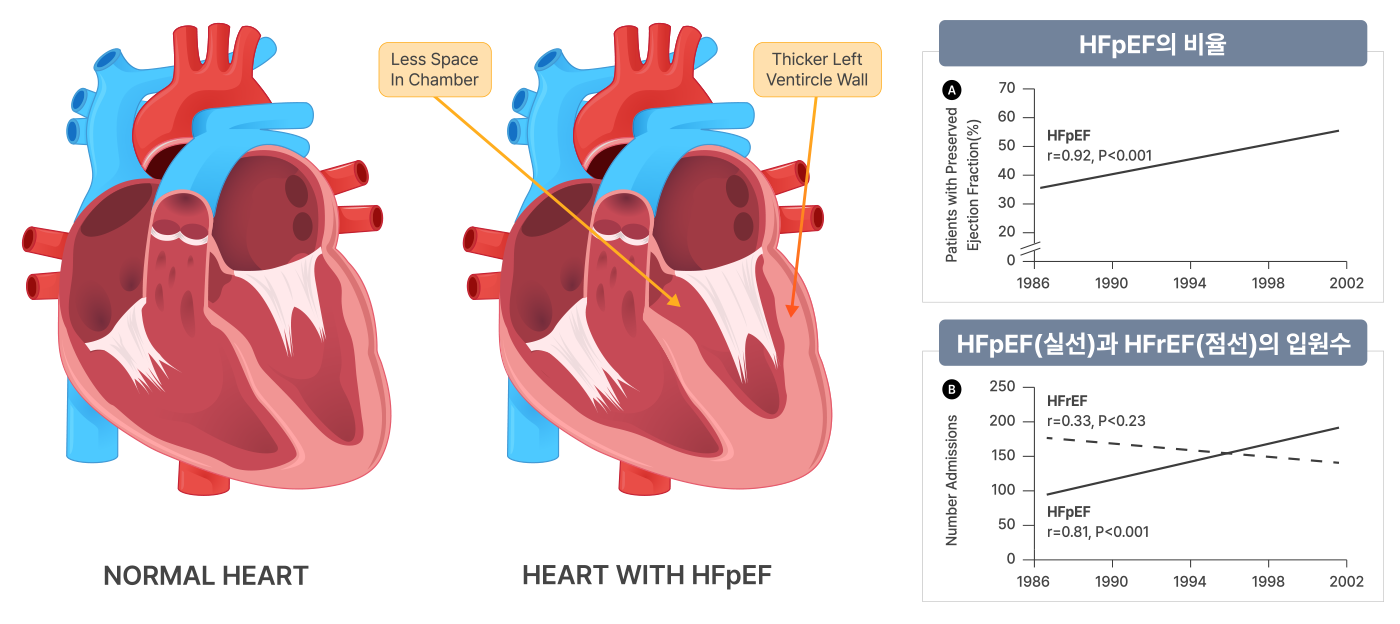
Heart Failure with Preserved Ejection Fraction (HFpEF): HFpEF accounts for approximately half of all heart failure cases.- Despite having seemingly normal systolic function, patients with HFpEF experience heart failure. Traditionally, heart failure was associated with reduced ejection fraction (HFrEF). However, since the 1990s, the prevalence of HFpEF has been steadily increasing due to the aging population and rising obesity rates.
- A significant proportion of hospitalized heart failure patients are diagnosed with HFpEF, and the long-term prognosis for HFpEF is known to be as poor as that for HFrEF. Despite many advancements in heart failure treatment over the past 25 years, there are currently no therapies that definitively improve outcomes for patients with HFpEF.
Market Trends
Global Heart Failure Therapeutics Market
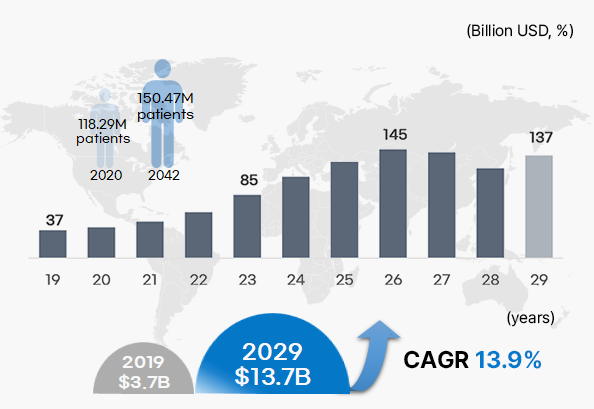
The global market size for heart failure therapeutics is projected to reach $13.7 billion by 2029
- The average prevalence of heart failure among the major nine countries worldwide is 1.3%, with South Korea having the highest prevalence at 1.98%.
(Global Heart Failure Patient Population) 150.47 million by 2042.
- - In the United States, there are approximately 6.5 million heart failure patients, with around 960,000 new cases each year.
- - In the United States, there are approximately 6.5 million heart failure patients, with around 960,000 new cases each year.
Global Market for HFrEF · HFpHF
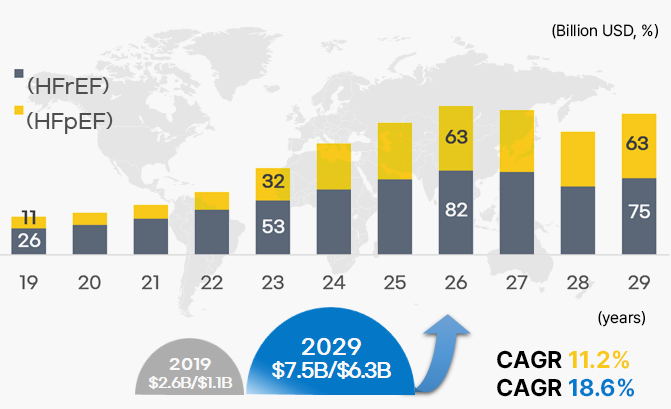
The global market size for HFrEF therapeutics is projected to reach $7.5 billion by 2029
The global market size for therapeutics is projected to reach $6.3 billion by 2029
- The market share of HFpEF therapeutics is expected to increase from approximately 28% in 2019 to 46% by 2029.
- HThere is a need for the development of effective therapies for HFpEF, have shown efficacy for HFrEF do not demonstrate the same efficacy for HFpEF.
- The market share of HFpEF therapeutics is expected to increase from approximately 28% in 2019 to 46% by 2029.
- HThere is a need for the development of effective therapies for HFpEF, have shown efficacy for HFrEF do not demonstrate the same efficacy for HFpEF.
(Source: KISTI, ASTI MARKET INSIGHT, 2022)