Heart Failure after Myocardial Infarction
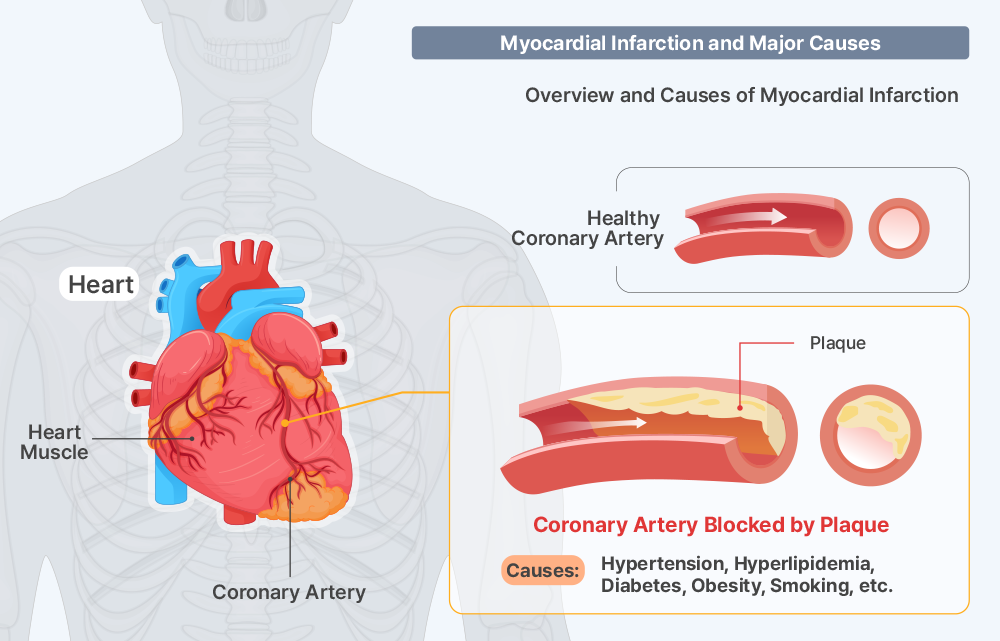
When one of the three coronary arteries becomes acutely blocked due to thrombosis or rapid vascular contraction (spasm),
the oxygen and nutrient supply to the entire heart or part of it is drastically reduced, leading to the necrosis (death) of heart muscle tissue or cells.
Main Symptoms
- Angina and myocardial infarction are collectively referred to as ‘Coronary Artery Disease (CAD)' with myocardial infarction representing a severe form of the disease.
- When endothelial cells are damaged, unstable atherosclerosis can easily rupture, forming a thrombus and leading to myocardial infarction.
Myocardial infarction and Main cause
Main Symptoms
 Chest pain
 syncope
 dyspnea
Unmet Needs in Heart Failure Therapeutics
- 01 The need for new heart failure medications that can reduce mortality rates
- 02 The need for new heart failure medications that can reduce hospitalization rates
- 03 The need for heart failure medications with improved renal stability/safety and a better complication profile
- 04 The need for effective treatments for HFpEF
Chest painsyncopedyspnea- 01 The need for new heart failure medications that can reduce mortality rates
- 02 The need for new heart failure medications that can reduce hospitalization rates
- 03 The need for heart failure medications with improved renal stability/safety and a better complication profile
- 04 The need for effective treatments for HFpEF
Increasing Mortality Rates Related to Cardiovascular Diseases
- Myocardial infarction is a representative cardiovascular disease
- Currently, there are no treatments available that can prevent heart failure following a myocardial infarction
Securing technological capabilities can lead to a monopolistic position
Need for Research and Development
- Preventive treatments for post-infarction heart failure have mainly focused on stem cell development for myocardial regeneration but have not met expectations
- There is a need to develop new therapeutic technologies that can prevent heart failure by inhibiting excessive left ventricular remodeling through mechanisms that control post-myocardial infarction inflammatory responses
Avoid competition and create new markets
Need for Technological Development
Limitations of Existing Myocardial Infarction Treatments- The incidence of heart diseases, including myocardial infarction, is continuously increasing and is expected to rise further with an aging population
- While the short-term survival rate for acute myocardial infarction patients has improved due to advancements such as a mechanical reperfusion strategy, neurohormonal blockade therapies, and guideline-directed medical therapies, the risk of heart failure has increased
- Most existing heart failure treatments mainly alleviate symptoms.
There is a growing need to develop safer and more effective drug therapies that reduce complications.
Industry Trends
- According to statistics from the Health Insurance Review and Assessment Service, the number of patients visiting hospitals for myocardial infarction is steadily increasing
→ Particularly high-risk groups include the elderly, smokers, hypertensive patients, diabetics, and those with obesity, who are more prone to arteriosclerosis - (Biopharmaceuticals) The development focus on biopharmaceuticals is increasing due to their potential to treat rare and intractable diseases, excellent efficacy, and fewer side effects
- Developing innovative new drugs (Best-in-Class Drugs) that are effective for ischemic diseases is crucial for future drug development
→ There is an urgent need to develop drugs that fundamentally prevent and treat ischemic heart disease and stroke
Trends in the number of myocardial infarction patients and age distribution
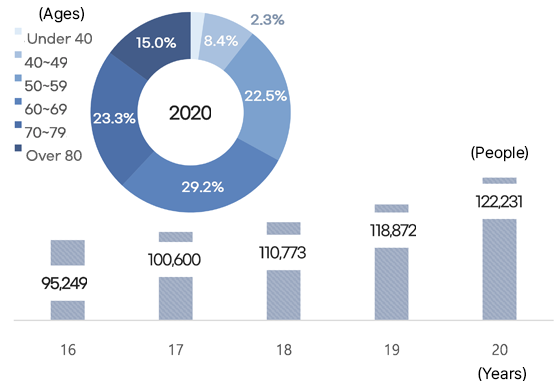
(Source: Health Insurance Review and Assessment Service in Korea)
Risks of myocardial infarction
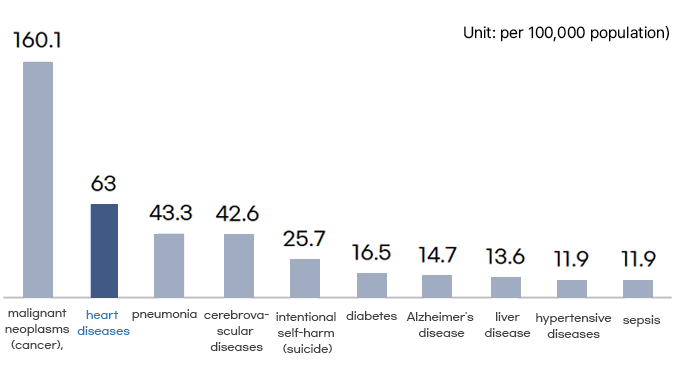
(Source: 2020 Cause of Death Statistics, Statistics Korea)
Heart disease is one of the most critical health issues in Korea,
with increasing risks and burdens due to an aging population
Market Trends
The global market size for myocardial infarction therapeutics is projected to grow from → $1.5 billion in 2020 to over $2 billion by 2026, with an average annual growth rate of 4.72% The global market size for ischemic disease therapeutics is expected to increase from → $1.58 billion in 2020 to $2.29 billion by 2027, with an average annual growth rate of 5.4%- For ischemic stroke, approximately 15% of patients experience recurrence and death within one year, and about 24% within three years
- With an aging society, the number of patients is expected to continue increasing, leading to an expanding therapeutics market
- The most common comorbidities among patients treated for atrial fibrillation are hypertension (25.3%), heart failure (11.9%), and hyperlipidemia (9.9%)
Global Market for Myocardial Infarction Therapeutics
(Unit: Billion USD, %)
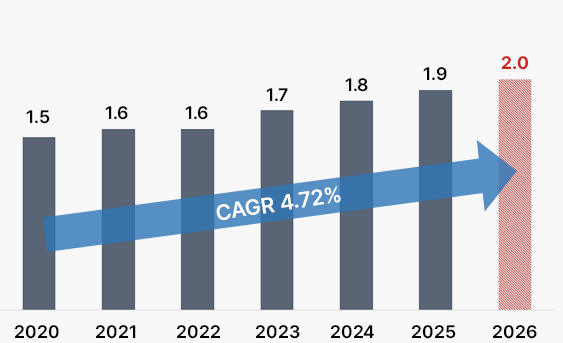
Source : Global Information, Global Myocardial Infarction (MI) Therapeutics Market,2022
Global Market for Ischemic Disease Therapeutics
(Unit: Billion USD, %)

Source : Coherent Market Insights, 2020